Production overview – A continuous process
By continuously experimenting and researching new materials and manufacturing methods, we are pushing the boundaries of what and how you can manufacture composite products while staying price competitive.
In our state-of-the-art production facility we produce high quality composite parts with an end-to-end ownership concept.
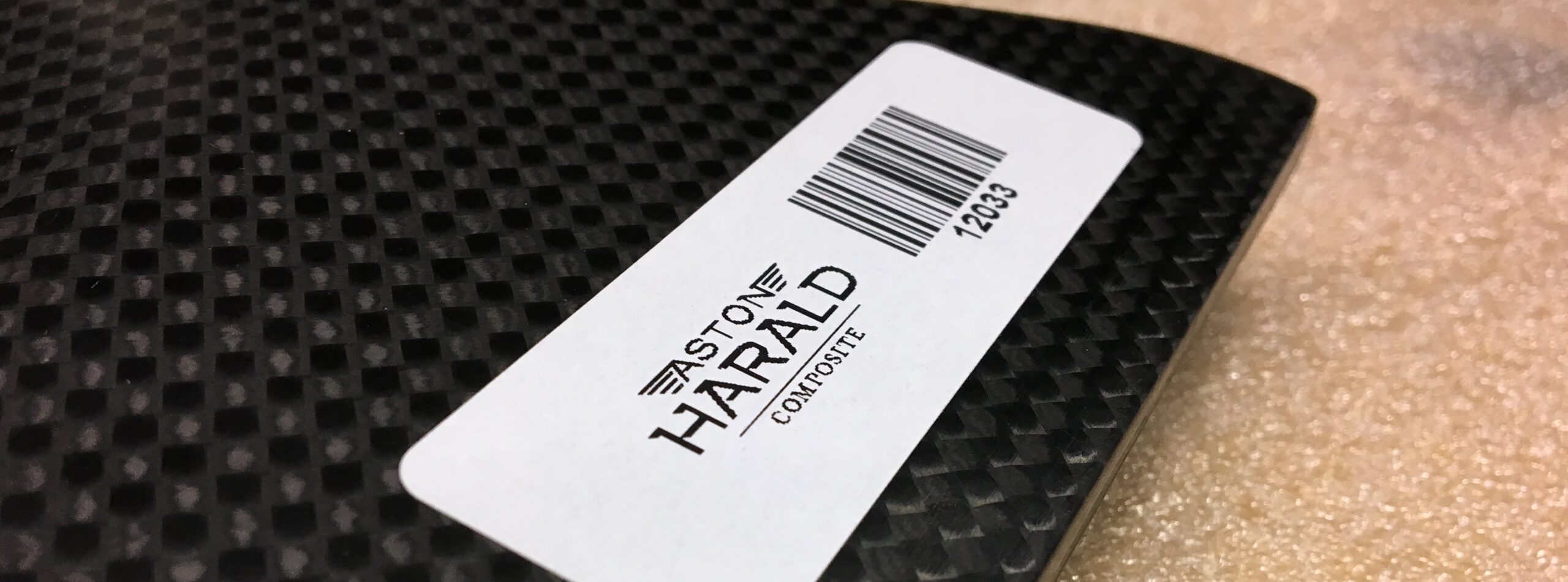
Throughout the process, our bespoke digital traceability system enables us to track and control each parts history and quality.
With high flexibility and in-house expertise we are able to be structured and fullfil long term, continuous projects as well as to be reactive and adapt to a customer’s urgent needs.
Production facility
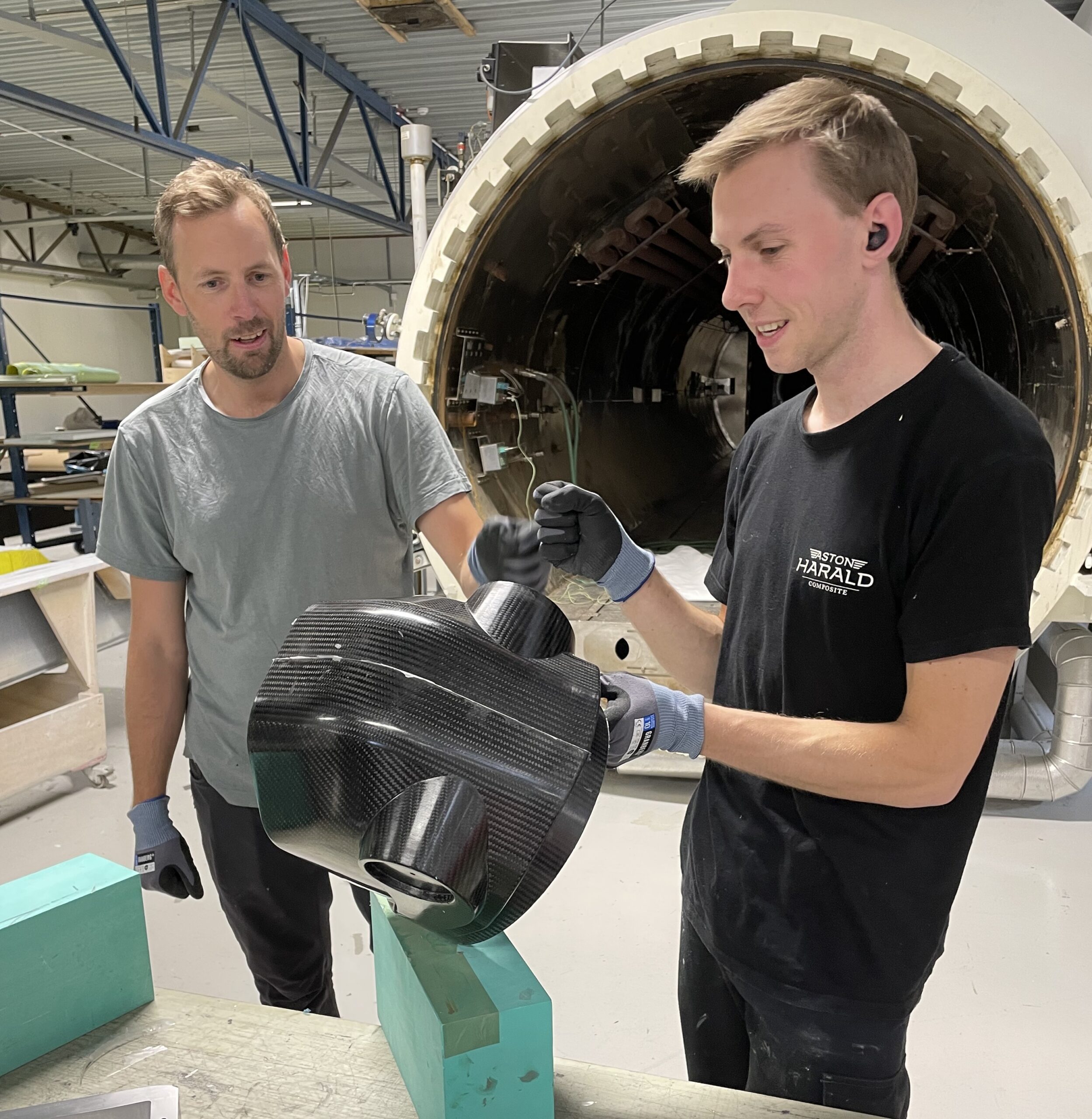
Newly refurbished composite production facility with 2200 m2 production floor, located in Gothenburg Sweden.
- Main production hall, 60 x 12m, ceiling height 5,5m
- Paint and trimming boxes
- Prepreg lamination room
- Machine shop for metal, wood and tooling block materials
- Block material cut and glue abilities
- Autoclave
- Composite press
- Curing oven
- 5-axis milling machine
- CNC cutting table
- Freezer storage (for pre-preg)
- Etc.
In-house design
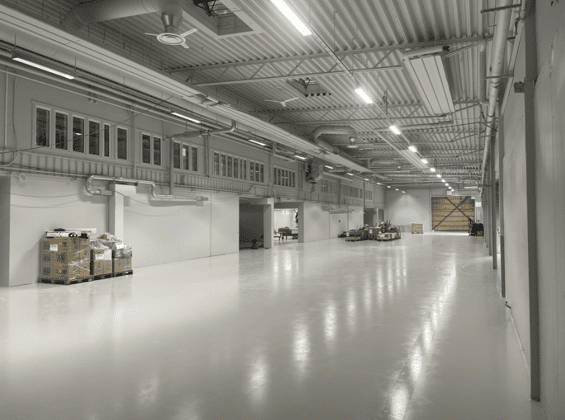
The members of our in-house design team have been hand picked from a number of different industries and their backgrounds are as diverse as they are interesting. From shipbuilding to automotive and construction, their talents and competences differ. What they do all have in common however, is that they are all innovators in their field, they all have an exceptional eye for detail and think just a little differently. But above all, to them every product and project is not just a another job, but a matter of pride.
They can take an existing idea or design and move it from the drawing board to delivery exactly as the customer envisaged, or they can help you shape the concept of a product from the very begining of the creative process. In short, Aston Harald Composite can not only help build an idea, we can also help to conceive it, whilst considering various perspectives (i.e. perfomance, environment, functionality, etc.).

In-house Machining – Cutting and milling
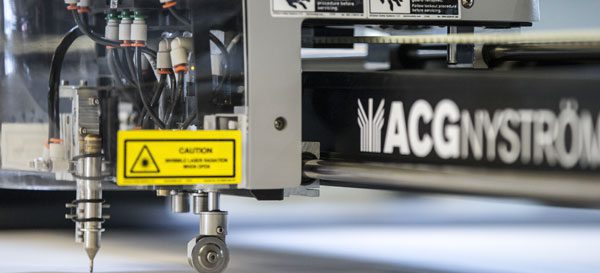
Our in-house cutting table and 5-axis CNC milling machines (2,5 x 1,5 x 1,2m) are not only a key part of our in-house concept, but allow us to maintain full oversight of production. This ensures that we are able to maintain our quality standard throughout each phase of manufacture while eliminaiting the possibility of schedule delays as a result of outsourced work.

Composite manufacturing technology – Prepreg
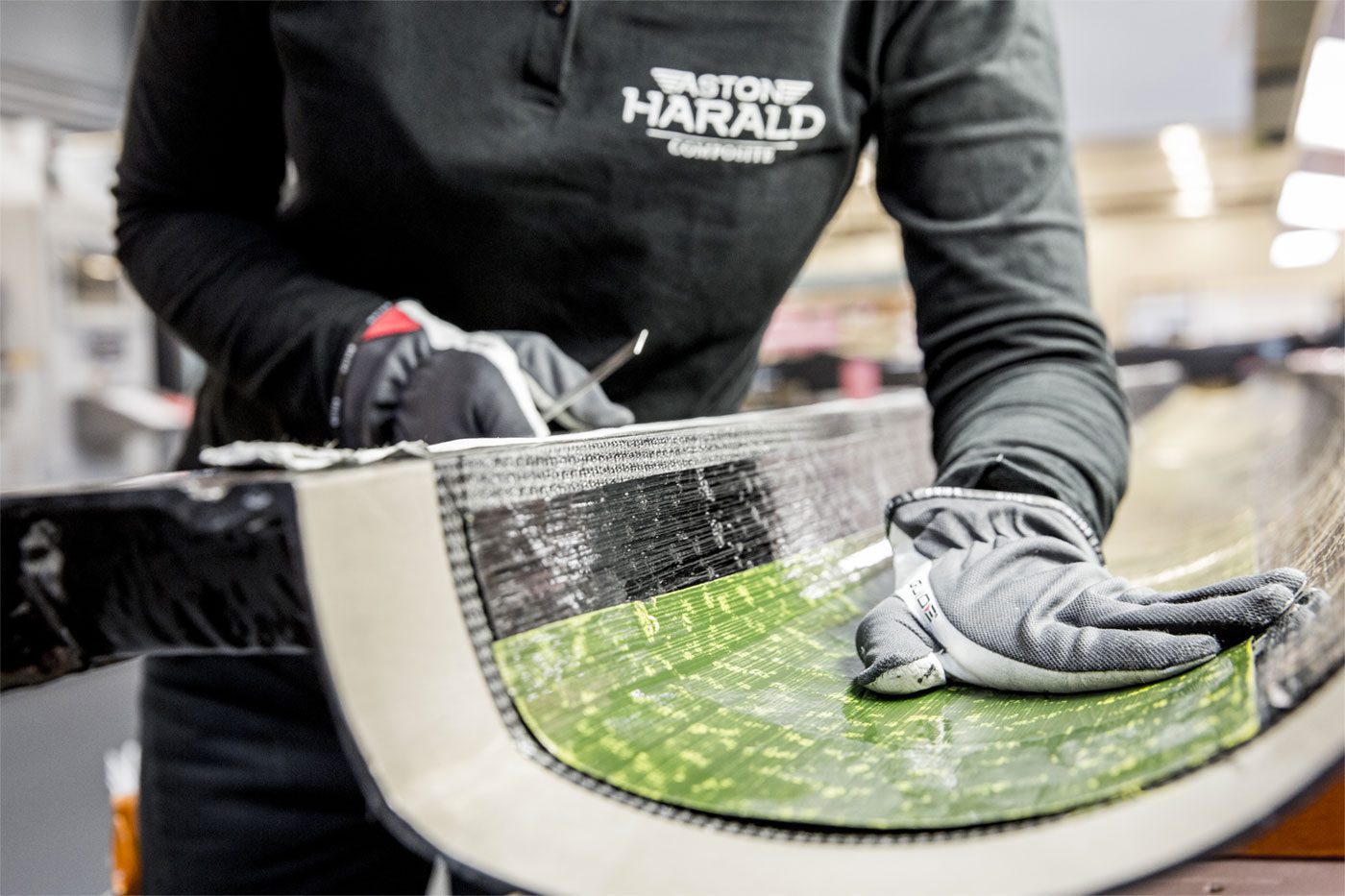
Prepreg (pre-impregnated) composites represent the gold standard in advanced manufacturing. These materials come pre-saturated with resin under controlled conditions, ensuring perfect fiber-to-resin ratios and unmatched consistency. Used in aerospace, aviation, defense, medtech and renewable energy, prepreg technology delivers superior strength, lightweight performance and exceptional quality.
Why and when to choose Prepreg
- Unmatched Quality: Factory-controlled resin content guarantees precision and repeatability.
- High Performance: Ideal for structural components requiring maximum strength-to-weight ratio.
- Design Flexibility: Compatible with complex shapes and high-end finishes.
- Clean & Efficient: Reduced mess and waste compared to wet lay-up methods.
Method (in short):
- Material Preparation – Prepreg sheets or tapes are stored in a controlled environment (freezer) to maintain resin properties.
- Lay-Up – Layers are placed in the mold according to design specifications.
- Curing – Heat and pressure (most often in an autoclave) activate the resin for optimal bonding.
- Finishing – Components are trimmed and polished for precision applications.
Composite manufacturing technology – Vacuum infusion
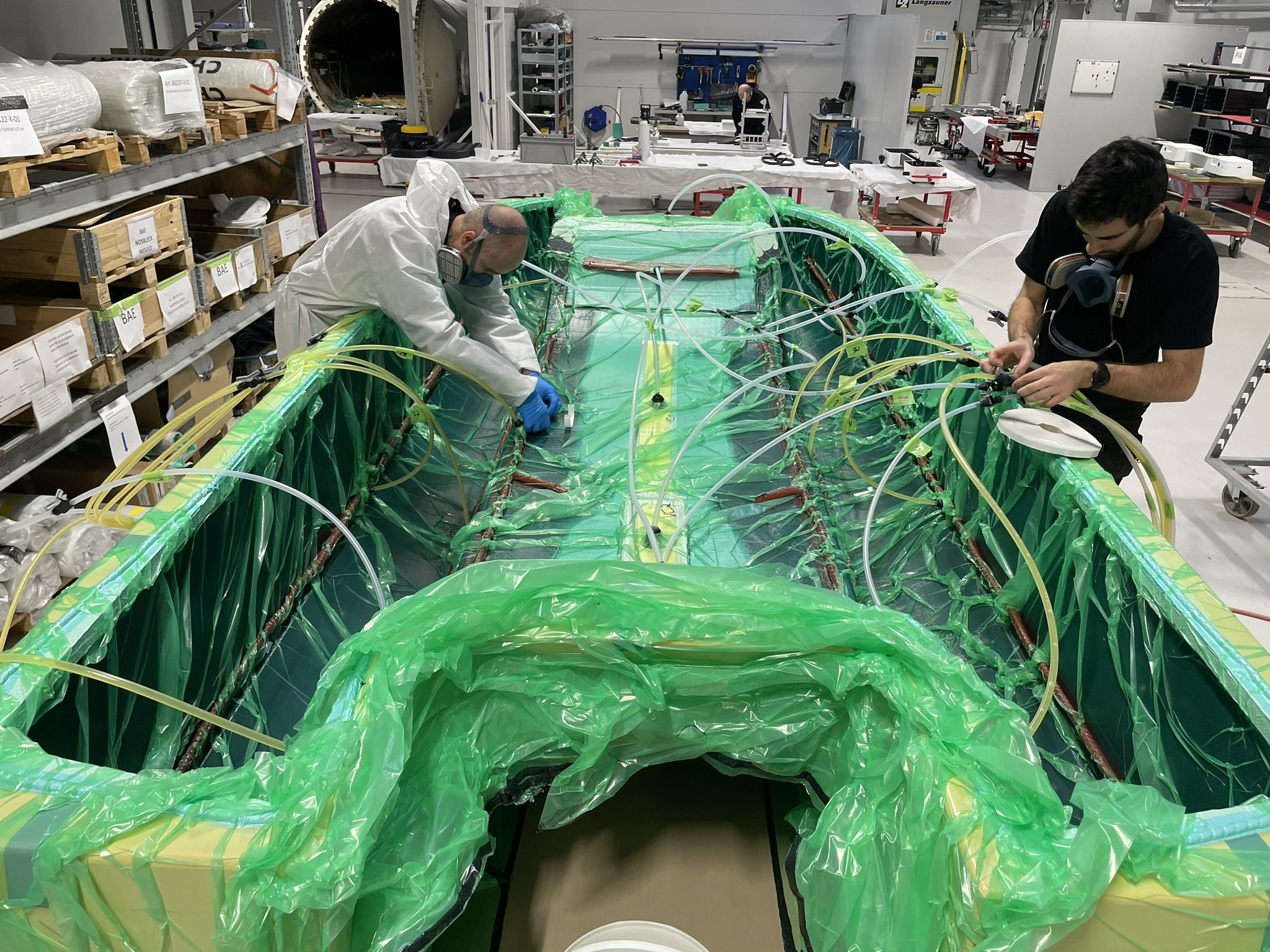
Vacuum infusion is a cutting-edge process for producing high-quality composite parts with exceptional strength and minimal weight. By using vacuum pressure to draw resin into a sealed mould, this method ensures good fiber-to-resin ratios, reduced voids and consistent results. Ideal for industries such as marine, automotive, wind energy, and aerospace, vacuum infusion delivers performance in one streamlined process.
Why and when to choose Vacuum infusion
- Superior Quality: Achieve optimal fiber saturation and minimal air pockets for stronger, lighter components.
- Scalability: Perfect for both small custom projects and large-scale production.
- Cost Efficiency: Reduce resin waste and labor costs compared to traditional hand lay-up methods.
- Environmental Advantage: Lower emissions and improved workplace safety through closed-mold technology.
Method (in short):
- Preparation – Lay dry fibers into the mold and seal with a vacuum bag.
- Infusion – Apply vacuum pressure to draw resin evenly through the fibers.
- Curing – Allow the part to harden under controlled conditions for maximum strength.
- Finishing – Trim and polish for a flawless final product.
Composite manufacturing technology – Compression moulding
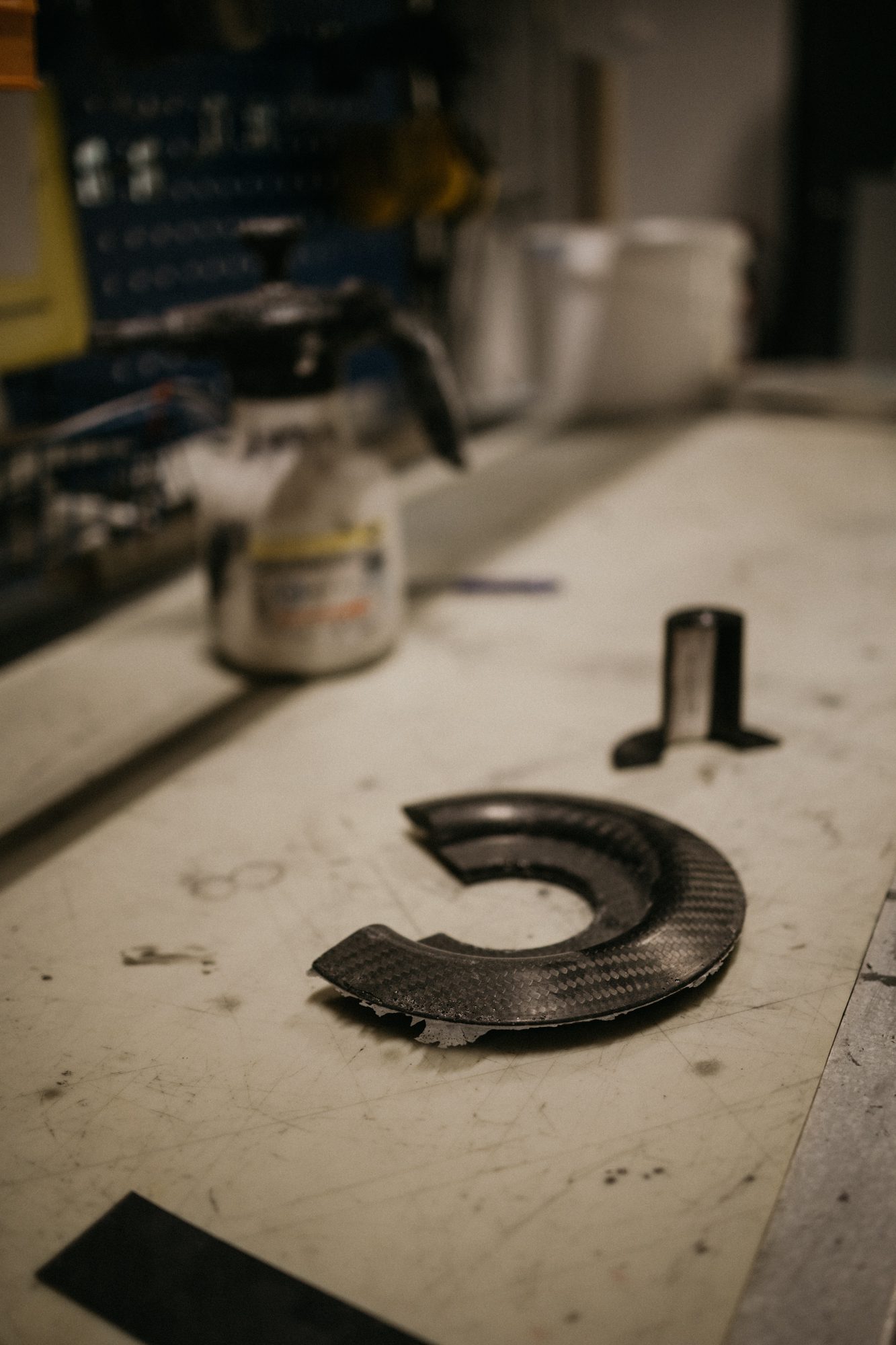
Compression moulding is a proven technique for producing strong, high-quality composite parts at scale. By applying heat and pressure to pre-measured material in a closed mould, this process ensures excellent dimensional accuracy and repeatability. Ideal for automotive, aerospace, electrical, and industrial applications, compression moulding combines efficiency with outstanding mechanical properties.
Why and when to choose Compression moulding?
- High Strength & Precision: Consistent results with excellent surface finish.
- Cost Efficiency: Perfect for medium to high-volume production runs.
- Material Versatility: Works with thermoset and thermoplastic composites.
- Reduced Waste: Controlled material usage minimizes scrap.
Method (in short):
- Material Loading: Pre-weighed charge (sheet or bulk molding compound) is placed into the heated mould.
- Compression: The mold closes, applying heat and pressure to shape and cure the part.
- Cooling & Demolding: The part solidifies and is removed for finishing.
- Post-Processing: Trimming and surface treatment for final specifications.
Curing – Heat and pressure (Autoclave)
Autoclave curing is used to achieve the absolute minimum amount of air voids within the resin when producing composite components maximising strength to weight ratio. This is done by placing the part under vacuum in an autoclave and then pressurising the autoclave during a heated cure cycle.
Our autoclave is:
- 11 x 2m
- Fully programmable control system with ramping temperature and pressure
- Individual vacuum, temperature alarming and logging
- Rated for up to 10bar and 150°C

Curing – Heat and pressure (Press)
For larger production runs we can utilise our hydraulic composite press. This allows us to reduce the cure cycle from hours to minutes, significantly increasing the number of parts we can produce in a given timeframe.
Our press:
- Press area 800 x 600mm
- Max force 1300kN, min 55kN
- Opening distance 600mm
- Work temp 250°C max working temperature for thermoset materials
- 400°C infra-red heating (with shuttle transfer system) for thermoplastic materials

Traceability – Track and trace
Our bespoken traceability system (including logging of processes) is an integral part of our production. Of particular importance to many industries, it allows us to not only trace who worked on each part but where and when they did so. The system we use has been custom developed for Aston Harald Composite and even allows us to identify the specific batch of raw materials each part was made from.